Showing posts with label Economy. Show all posts

Thursday, 22 September 2016

Ways employees can make extra income

Ways employees can make extra income
Is your dwindling bank account impacting your health? The American Psychological Association released a survey showing that money stress impacts Americans’ health nationwide. And,
as it turns out, the wealthy are also stressed about money – not just those in lower income households.
You can eliminate some of that financial stress by earning extra income, even if you have a full-time job. Steve Chou of MyWifeQuitHerJob famously started two six-figure businesses while continuing to work at his day’s job.
Whether you’re looking for cash to launch your start-up or make new investments with or dig out from mounting debt, a few hundred to a few thousand dollars a month can change your life. Here’s how to get started.
Start a service business
Launching a service business can be done without a large network, an online presence or much overhead. The easiest way to start is by telling people Register Free Domains in your existing network what you’re offering and asking them to spread the word.
Noah Kagan from AppSumo nailed this concept. He decided to see if he could earn $1,000 in 24 hours, starting from scratch. He ended up founding a successful beef jerky subscription business that he gave to one of his students to run.
You can steal his concept, with a business like dinner catering, freelance writing or online marketing. Start by crafting a killer outreach email to get yourself up and running in just a few days.
Invest in real estate
Becoming a landlord isn’t always practical for those who are in full-time employment and already strapped for cash. But you can look at buying a condo or small property in another country as a vacation getaway instead. The price tag is typically cheaper, even when you hire a local property management group to manage rentres while you are away.
Commercial real estate can also be a lucrative way to invest and earn passive income, even without a large down payment. Get started with a site like Realty Mogul, and invest in commercial real estate for as little as $5,000. You’ll get vetted deals and access to high-end listings you wouldn’t otherwise find.
Launch an online resource
Share your expertise by launching an online ebook or course to help others while you earn passive income. My own ebook, 100 Days of Growth, ended up generating more income than my day’s job. It was a ton of upfront work, but once it was ready to go, it took minimal effort to maintain and to keep up with sales.
If writing ebooks isn’t your strong suit, launch a video course or boot camp instead. I didn’t stop at books, I also launched a content marketing boot camp through ContentMarketer.io to help my clients master content-marketing abilities in 10 weeks.
Leverage the power of Amazon
It’s always an admirable goal to launch your own online store and build a customer base, but you’re also talking about wearing many different hats. You need to research products, find a manufacturer, market your site and figure out how to fulfill orders. Don’t forget about customer service and refund requests.
Instead, you could sell a product and develop a presence directly on Amazon without the need to take on so many roles. Some sellers even have their products shipped directly to Amazon’s fulfillment centre and never touch the product itself.
Join the sharing economy
It’s not hard to nail down a few hundred to thousands of dollars a month by leveraging the sharing economy. But it’s not just about renting out your spare bedroom or basement on Airbnb. Rent out your car on Turo and bike to work or carpool instead. Rent out your camera equipment lying around your house on Cameralends, your snowboard or bike on Spinlister or your sailboat on Sailo.
And if you are going to rent on Airbnb, consider helping your revenue skyrocket by renting out your entire house instead, and using the opportunity to visit family or go on vacation.
Host an event
You can make money hosting events Low Credit Line Credit Cards without aiming for thousands of sign-ups, vendors and high-profile guest speakers. Instead, form a free MeetUp group on a topic you’re knowledgeable about, like growth hacking, and run free events.
After you have secured a loyal Webex Costs following, you can charge for an event with a reputable guest speaker. Rent out a small, upscale conference room at a nearby hotel, and grow your new MeetUp by hosting exclusive, sought-after events that charge a premium for fantastic content.
Get paid to do what you’re already doing
Take inventory of what you’re doing in your free time. People who love skydiving (like me!) can get certified to teach and do jumps on the weekend. You get to do what you love while earning extra money at the same time. Ask your local bar if you can help run its trivia night, or bartend a few nights a week while hanging out and getting to talk to interesting people.
Even if you’re not interested in doing much but relaxing and surfing online, you can earn money by testing websites and recording your opinion with a site like UserTesting.
So, get out there. Use your imagination to start a flow of extra income today.
–www.entrepreneur.com

Tuesday, 20 September 2016

Manufacturers back Finance minister’s call for interest rate cut

Manufacturers back Finance minister’s call for interest rate cut
The Minister of Finance, Mrs. Kemi Adeosun, has called on the Central Bank of Nigeria to lower interest rate so that the government can borrow domestically to boost the economy without increasing debt servicing costs.

While reacting to the minister’s call, the President, Manufacturers Association of Nigeria, Dr. Frank Jacobs, said that a cut in interest rate would be the best thing to happen to the economy.
“He said, “It will be the best thing that has ever happened to the economy, particularly the manufacturing sector.
“It is what we have been agitating for since and if the interest rate is brought down, it will be the best decision in the current economic dispensation.”
The government is also planning an “immediate large injection of funds” through asset sales, advance payments for licence renewals and infrastructure concessions, the Minister of Budget and Economic Planning, Senator Udo Udoma, said.
Adeosun said she was working with the Debt Management Office, Nigeria Sovereign Investment Authority and the pension industry to issue an infrastructure bond to raise money for road and housing projects.
She urged the central bank to reconsider its July interest rate increase, which it implemented to help support the naira and attract foreign investment.
The central bank is due to announce its next rate decision today (Tuesday) after the conclusion of its Monetary Policy Committee meeting, with some economists predicting that it will keep the key interest rate at 14 per cent, while others maintain that a cut is inevitable.
Adeosun told CNBC Africa, “We need lower interest rates, because when we are borrowing and interest rates go up, it increases our cost of debt service and it reduces the amount of money that is available to spend on capital projects.
“The attempt was to manage inflation and the trade-off for the economy right now is what is a bigger problem: Is it growth or inflation? For me it is growth. I would rather seek growth. We can manage inflation. I think for us, at the moment in the Nigerian economy, growth is the most important thing.”
Udoma told a business conference that the government planned asset sales to inject more funds into the economy but gave no details. The government has spent almost N800bn on capital expenditures since the budget was approved in May, officials told Reuters.
The minister also said the government had almost finished preparing a bill for the National Assembly to approve emergency powers for President Muhammadu Buhari to improve the business climate.
Adeosun said some adjustment was needed to narrow the spread between the official and black market currency rates, which is running at 25 per cent since the central bank floated the naira.
“We still need to make some necessary adjustments to ensure that the spread is narrow, so that we have true price discovery,” she said.
Meanwhile, the Finance minister said the country Email Bulk Service had received commitments to its planned $1bn Eurobond from international investors, which it aims to issue before the end of the year, but insisted that pricing would be key.
The government is currently seeking advisers and book runners and is currently accepting proposals from international and local banks for the bond sale, according to Bloomberg.
“We already have quite strong indications and indeed we had some commitments. Even though we weren’t doing a deal, we already have commitments to our bond offer; so, we are very confident that it is just a question of pricing,” Adeosun said.
The minister also said the regulators had approved plans to enable the investment of as much as $20bn of pension funds in the development of infrastructure.
The Securities and Exchange Commission and the National Pension Commission have approved “a new instrument that will allow pension funds to invest in infrastructure bonds,” Adeosun said at a meeting of business leaders in Abuja on Monday.
“That’s what will drive, for example, our social housing and our roads programme outside the budget,” she added.
Renowned economist and Chief Executive Officer, Financial Derivatives Limited, Mr. Bismarck Rewane, said in a telephone interview with one of our correspondents that he and other experts had before now stressed the need to reduce the interest rate.
He said, “There is no other way but to reduce the interest rate. During recession, Britain brought down interest rate; and in the US during the recession, what did they do? They brought down interest rate as well. So, we need to bring down the interest rate.”
The Director-General, West African Institute for Financial and Economic Management, Prof. Akpan Ekpo, Paperport Promotional Code who lent his voice to the call for a cut in interest rate, said, “That is the only way to fast-track the recovery of the economy. The interest rate must be reduced to close to single digit, if not single digit, in order to stimulate the real sector. Now, it is an average of 25 per cent and that is too high.
“The real sector is dead now; when you are in a recession and the real sector is dead, then the recession will last for long.”
Ekpo said the Monetary Policy Rate, which is the benchmark Dayton Freight Lines interest rate, should be reduced to 10 per cent from the current 14 per cent so that the lending rate would be around 13 to 14 per cent.
The Monetary Policy Committee of the CBN had at the end of its meeting in July raised the MPR to 14 per cent from 12 per cent.

Investment cuts threatening oil supply – OPEC

The head of the OPEC oil cartel warned Tuesday that sharp cutbacks in investment by petroleum firms poses a threat for future supplies.
Mohammed Barkindo said that after plunging by 26 percent last year, a further 22 percent drop in investment was expected this year.
Investment cuts threatening oil supply – OPEC
Oil firms have slashed their investment budgets as they seek to adapt to the price of crude falling from over $100 per barrel in 2014 to under $30 at the beginning of this year, before recovering to around $45.
On Tuesday, Brazil’s state oil company Petrobras announced Neuson
it will cut investments by 25 percent over the next five years.
Barkindo called the cutbacks a “major concern for industries which need regular investments” and “which threaten our future”.
Too severe a cutback in investment Car Donate could leave the industry unable to meet rising demand in future years.
The OPEC secretary general said “to Car Insurance Quotes MN revise this cut in investments, the process of rebalancing the market needs to be fast tracked”.
Oil prices haven’t rebounded as there has been too much crude on the market, with OPEC cartel states primarily responsible as they have kept output high, seeking to maintain market share.
Previously, OPEC members would cut back output to balance supply and demand, thus ensuring prices stay at levels sufficiently high for profits and investments.
The 14 OPEC states and Russia are due to meet next week, with Venezuelan President Nicholas Maduro saying Sunday a deal on limiting output was close.

Monday, 19 September 2016

Afreximbank secures $300m China Exim-backed loan

Afreximbank secures $300m China Exim-backed loan
The African Export-Import Bank says it has closed its first-ever China/Taiwan specific syndicated loan with a 300 million dollar facility guaranteed by the Export-Import Bank of China (China Exim Bank).

Afreximbank said this in a statement on Monday.
Denys Denya, the bank’s Executive Vice President for Finance, Administration and Banking Services, said the five-year syndicated loan, which closed on September 12, was only opened to investors from China and Taiwan.
“This syndicated facility helps Annuity Settlements position Afreximbank to strengthen its role in the development of trade between Africa and the rest of the world, in particular China and the rest of the Far East.
“The conclusion of this facility Mesothelioma Law Firm demonstrates Afreximbank’s increasing ability to attract much-needed resources into Africa and to fund trade finance related investments that will have a positive impact on Sino-African trade.”
He said the facility, which had Standard Chartered Bank as the sole coordinator, book runner, and mandated lead arranger, Nunavut Culture was two times oversubscribed with 16 investors and participating banks.
Denya said the facility would help the bank achieve its liability management objective of reducing the cost of funds and diversifying its liability book by geography, investor type and tenor.

Monday, 5 September 2016

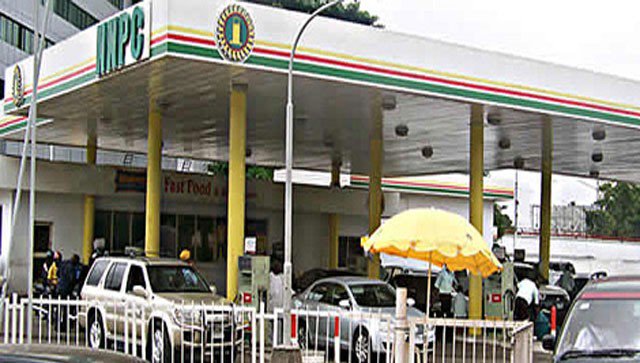
NNPC Reveals Fuel At N145/Litre No Longer Sustainable As It Calls For Hike In Fuel Price

NNPC Reveals Fuel At N145/Litre No Longer Sustainable As It Calls For Hike In Fuel Price
Former and present Group Managing Directors of the Nigerian National Petroleum Corporation have expressed fears that the current pump price of N145 per litre is no longer feasible.Close


John Ameh, Fidelis Soriwei, Friday Olokor, Adelani Adepegba and Okechukwu Nnodim

Former and present Group Managing Directors of the Nigerian National Petroleum Corporation have expressed fears that the current pump price of N145 per litre is no longer feasible.

They said the amount does not correspond with the price-determining components of the commodity and the fluctuations of the foreign exchange rate.

They stated this after a one-day meeting they held with the Minister of State for Petroleum Resources, Dr. Ibe Kachikwu, in Abuja.

The NNPC in its statement said, “They (the GMDs) noted that the petrol price of N145/litre is not congruent with the liberalisation policy especially with the foreign exchange rate and other price determining components such as crude cost, Nigerian Ports Authority charges, etc remaining uncapped.”

The declaration of the NNPC present and past bosses confirmed an exclusive report by SUNDAY PUNCH on August 7, 2016, in which Sell Annuity Payment oil marketers revealed that the actual or real cost of petrol was N151.87 when all the pricing components are adequately captured.

The marketers had stated that they were struggling to maintain petrol price at N145 per litre because of the stiff competition in the downstream oil sector, but stressed that the practice was not sustainable.

The GMDs, however, commended the NNPC for resolving the fuel supply crisis and urged the corporation to come up with measures that will ensure sustenance of seamless supply of petroleum products nationwide.

According to the corporation, the GMDs expressed concerns about the declining crude oil production level and its consequences on the environment and the nation’s revenue.

They further agreed that if the current situation remains unchecked, it could lead to the crippling of the corporation and the nation’s oil and gas sector which is the mainstay of the Nigerian economy.

The Nigeria Labour Congress, Trade Life Insurance Co Lincoln Union Congress, Afenifere, former federal lawmakers, security experts and rights activists, however, warned the President Muhammadu Buhari administration not to contemplate any further increase in the pump price of petroleum products in the country

The General Secretary of the NLC, Dr. Peter Ozo-Eson, who stated this in an interview with SUNDAY PUNCH, said Nigerians would not accept further fuel price increment.

Ozo-Eson had warned the government earlier this week Low Credit Line Credit Cards against increasing the pump price of petroleum products in the country.

He said, “We had given a warning before that Nigerians cannot take any further increase, that they shouldn’t do it.

“That remains our position, and if they go ahead and do it, it is up to Nigerians to say how they want to respond to it. But we remain opposed to any new increase in the price of petroleum product.”

Invest in made-in-Nigeria goods, Osun lawmaker tells FG

Invest in made-in-Nigeria goods, Osun lawmaker tells FG
Mr Tunde Olatunji, a member of the Osun House of Assembly, has called on the Federal Government to initiate policies that would promote locally produced goods in the country.

Olatunji, who is the House Committee Chairman on Commerce, Cooperatives and Youth Empowerment, made the call in an interview with the News Agency of Nigeria on Monday in Osogbo.
According to him, it is only a massive investment Mesothelioma Law Firm in the production of made-in-Nigeria goods that can grow the country’s economy and bring it out of recession.
He said with the fall in crude oil prices, there was need for the government to diversify the economy through the promotion of locally produced items.
“Our foreign reserve as of today is less than $300 billion to a population of over 170 million.
“We need to invest massively in locally Life Insurance Co Lincoln produced goods, especially in the area of agriculture for us as a nation to come out from this recession,” he said.
The lawmaker added that promoting locally produced goods would also help the government and the private sector in creating jobs for youths in the country.
He, however, said that it was regrettable that though Donate Cars in MA the country was blessed with abundant natural resources, it was poor because of its over reliance on crude oil and foreign goods.
“As a nation, we have to cut down on our taste for foreign goods because any nation that depends on foreign goods rather than producing its own cannot move forward,’’ he said. 
NAN

Sunday, 4 September 2016

How we kept Zuckerberg’s visit a secret — CcHUB CEO, Tijani

How we kept Zuckerberg’s visit a secret — CcHUB CEO, Tijani
Bosun Tijani, CEO/Co-founder of the Co-creation Hub, an incubator for technology start-up companies in Lagos, tells TOBI AWORINDE about planning Facebook CEO, Mark Zuckerberg’s first visit to Nigeria

 When did you discover your passion for mentoring young entrepreneurs?
My passion is not mentoring entrepreneurs. My interest is in finding ways to make technology work for us as a society and the reason why I am passionate about that is, I believe that as a society in Nigeria, and Africa as a whole, for us to move forward, we have to invest in our ability to create the future we want to see. That  literally means we need to imbibe the culture of building solutions. If we have bad roads, we need to imbibe the culture of understanding how to build roads that will last, not necessarily “importing” companies that will do it for us. If our education is bad, we need to be able to create a better education system. That is my interest. But fortunately, technology is one tool that enables and provides opportunities for us to do things at scale. We are a large country and if we use technology smartly, we can reach much more people within the country and also build exciting scalable solutions that last. That is why I have decided to do what I do, which is to find ways in which technology can be useful and one of those ways would be to find smart people.
If my interest is in building technology solutions, obviously, I have to find smart and creative people that will build those solutions. So, find them, support them, invest in them and expose them to people who can help make their ventures grow—that’s the first thing. The second most important thing is also working with civil society organisations; these are organisations that are passionate about solving social problems. It is important that we work with them and empower them to also use technology in exciting ways. The last one is that if everything I have said is ever going to work, we need talent—we need people who are talented. We Donate Your Car for Kids need people who can build the technology, so I am also interested in how do we find and train such people so that they can then become the future we want to see? That is what I do and what is what I am passionate about.
When did you start CcHUB?
We founded CcHUB in 2010, but the innovation centre opened in September 2011. I still have the book in which I started jotting the idea and I met with my co-founder, Femi Longe. We were both privileged to be in London—we studied in Nigeria and got the opportunity to go abroad for internship through a student organisation. We stayed in touch, met and shared ideas. He was working in social innovations; I was working in innovation consulting. We started thinking of how we could help support creative people in Nigeria. We started writing ideas down two to three years before launching in 2010.
How do you involve the government, knowing that a  lot of this is its responsibility?
Some of it; it’s not the sole responsibility of government. Government should be responsible; we have to work with government to provide the right enabling environment to make all these things work, but to a large extent, it is the responsibility of private sector organisations. Government has no business being in business; government’s role is not to run businesses and if government’s role is not to run businesses, government can’t understand how to support businesses. But what government can do is provide the enabling environment, put in the right infrastructure, and ensure that it is easy to do business in the country.
Government can do all that by working with private sector organisations to understand their needs, understand what enabling environment and infrastructure they can put in place that would help the business do well. What policies can they put in place that would make sure that businesses are not being spaced and businesses are creating jobs and generating wealth for the nation? That is the role of government. For civil society organisations, Sell Annuity Payment we have to go out there to look for them, because they are exciting organisations that take on the responsibility to do social good. In every society, you need them. They are not necessarily meant to replace government, but they are meant to support the work that government is meant to be doing.
What do you think about all the excitement that has come about as a result of Facebook founder, Mark Zuckerberg’s visit to Nigeria?
Who would not be excited? This man is worth about, how much, between $53 and $55bn. That is a lot of money. He is worth much more than our budget. He is, probably, the sixth or seventh richest man in the world, walking the streets of Yaba, right here in Nigeria. I think for a country like Nigeria, with all the bad press that we get and the cynicism around the name Nigeria, that was a huge surprise for everybody. It is unbelievable to a lot of people that Mark actually chose to come to Nigeria. It gives us hope that there is something unique about this place. But unfortunately, we are not taking advantage of it. Again, think about it, do you know that he came in on the day Nigeria was proclaimed to be entering the worst recession in 29 years? What sort of coincidence is that? When the world is telling us that we are going down, one of the richest people in the world came and he was telling us, “You have a lot of good in you and you can go up.” It is a message.
How much went into keeping his visit a secret?
It was challenging. We were literally warned not to (say anything); if there was a leak, he would turn back, he wouldn’t come. The sixth or seventh richest man in the world; it was a security threat. We didn’t know on time that he was the one that was coming; we knew a CEO or executive was coming from Facebook. Then few weeks before his arrival, we were informed that he was coming.
What were some of your expectations of regarding his visit?
I had absolutely no expectations. I didn’t know what to expect. Of course, everyone was stunned to see Mark. People were confused. But he was a cool guy, reasonable, mingled with everybody and took selfies.
 Did he comment on the energy and culture of Lagos?
I think he was really stunned at the entrepreneurial spirit of Nigerians. He said from the moment (the plane) landed, people were different and the way people just wanted to do things, he could tell that a lot of people here are serious-minded entrepreneurs. He Donate Cars in MA sees the opportunities, not only the fact that we have a big market; we have people who are talented, people who are dreamers and for him, that is a major part of our future and one of the things that will determine how far we go as a people.

Saturday, 3 September 2016

Etisalat Nigeria Launches “SME Arena” a One-Stop Social & E-Commerce Portal

Etisalat Nigeria Launches
Etisalat Nigeriahas once again raised the bar of innovation through the launch of a bespoke e-commerce portal “SME Arena”which allows small and medium-sized enterprises to showcase their products and interact with customers and business partners.
 

At the launch of SME Arena, Webex Costs which held on the 10th of August, 2016 in Lagos, Etisalat Nigeria’s CEO, Matthew Willsher said, “At Etisalat Nigeria, we pride ourselves as the most SME-friendly telecommunications company in Nigeria.

Our commitment to the development and growth of small and growing businesses in Nigeria led us to create several platforms that enable budding entrepreneurs to succeed.” 

Commenting on this exciting new Better Conference Calls venture with Etisalat, YuuZoo CEO, James Sundram said, “We are deeply honoured that Etisalat, one of the world’s leading telecommunications operators, has chosen us to be their trusted technology and solution partner for this new social e-Commerce launch.”
Developed and managed for Etisalat Nigeria by Singapore’s YuuZoo Corp,SME Arena is a brand new social and e-Commerce platform Psychic for Free and the first portal in Africa to combine social networking, e-Commerce, online business directory and entertainment, offering consumers an exciting and new user experience.
Visit www.smearena.com.ng to find out more.
Below is a photo reel of the dignitaries that attended the SME Arena launch.

Economy: Blame Jonathan, not Buhari for Nigeria’s woes –Presidency

Blame Jonathan
The Presidency on Friday said Nigerians must learn to bear the pains of an economy in recession because that was the way to go if the country must be fixed.

It also insisted that the nation’s woes were caused by the mismanagement that characterised the administration of former President Goodluck Jonathan.
The Senior Special Assistant to the President on Media and Publicity, Garba Shehu, said these in an opinion article titled “What is President Buhari doing with the economy?”
Shehu faulted those who hold the view that the President should forget the past and concentrate on how to reposition the country.
He said the present administration must keep a fiery Sell Annuity Payment memory of the past so that it does not repeat past mistakes, adding that the future must be built on the foundations of the past.
He said, “To avoid repeating the past mistakes, Nigerians must come to terms with what went wrong with the past, how bad things were, what was done wrongly, what the past government should have done, before we come to what needs to be done to right those wrongs.
“Believe me; episodes from the Jonathan era can fill books, and other possibilities, such as courtroom drama thriller.”
He attributed the current pain, which he said was inevitable to the mismanagement of the past.
He added, “The current pain is due to the mismanagement Donate Cars Illinois of the past. What Nigeria is currently experiencing was inevitable. This government is simply being honest with the people instead of piling up debts and concealing the truth by pretending all was rosy. This government believes that Nigerians deserve to know the truth.
“People stole unbelievable amounts of money. The kind of money some of these ex-officials hold is itself a threat to the security of the state. Since it is not money earned, they feel no pain deploying just anyhow to thwart genuine and well-intentioned government efforts.
“Sadly, even that which was not stolen was wasted. Government coffers were left empty, with huge debts unpaid and unrecorded (this government is working to quantify the amount owed). Even the current high food prices can be traced to past deceit.
“For example, the previous government purchased fertilisers in 2014, worth N65bn and left the bill unpaid. In 2015, the suppliers could not supply fertilisers which resulted in a low harvest, shortages and high food prices.
“This government had to pay off the debt so that the suppliers Online Classes could begin to supply fertilisers again.  Across Nigeria, a green revolution is occurring as Nigerians are going back to the farms, from rice in Kebbi and Ebonyi to Soya and Sesame in Jigawa and Kano. At the same time, Nigerians are looking inwards to identify commercial opportunities from agri-businesses.
“Most of our road contractors had not been paid since 2012; many of them had sent their workers away, adding to the unemployment problem. This government has released capital allocations in the last three months that is more than the whole of 2015. In 2015, Nigeria spent a paltry N19bn on roads, in three months we have spent N74bn and we are already releasing more.
“In the transport sector in 2015, government spent just N4.2bn; we have spent N26bn, with more to follow. We are starting a concession that will revive our old rail system for freight, whilst we build a new high speed rail system. Moving heavy goods by rail will reduce our transport costs which will reduce food prices and will save our roads from damage from heavy loads. Government will embrace the private sector through PPP, concessions and other collaborations to deliver services and infrastructure efficiently.”

2016 budget may not achieve target – Fashola

2016 budget may not achieve target
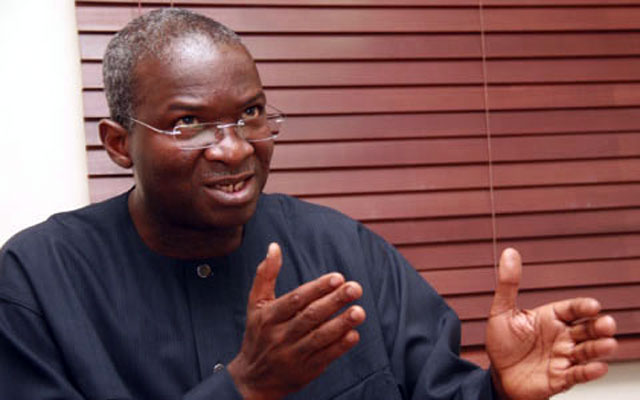
Minister of Power, Works and Housing, Babatunde Fashola
The Minister of Power, Works and Housing, Mr. Babatunde Fashola, has warned that the Federal Government’s
aim of achieving inclusion and employment, through the N6.6tn 2016 budget  may be elusive; and that the people targeted  may not benefit,  if government’s spending or contracts are mainly handled by foreign companies.
He also said the gains might not be realised if professionals were either not participating or, where they did, preferred imported goods to local ones.
He urged indigenous companies, professionals, artisans and all Nigerians to take advantage of the FG’s budget of N1.8tn for capital Annuity Settlements expenditure, in particular; and N6.06trn total budget size, to increase their patronage, professional efficiency, job and wealth-creation potential.
He spoke during the fifth meeting of the National Council on Lands, Housing and Urban Development in Ilorin, the Kwara State capital on Friday.
The summit was themed, ‘Building adequate Mesothelioma Law Firm capacity of professionals, artisans and tradesman in the built environment.’
The minister said the plan of President Muhammadu Buhari’s administration to increase the capital spending in 2016 budget to 30 per cent of the total budget size of N6.06trn was enough evidence of change.’
He stated that the aim of FG’s N6.06tn budget was to reflate the economy, stimulate it and increase national productivity.
Fashola said, “The decisions taken by the Buhari administration is to increase the capital spending in 2016 budget to 30 per cent of the total budget size of N6.06tn.  This is change for those who still ask what has changed. It is change because it is a welcome departure from almost a decade of spending only 10 per cent of our annual budget on capital expenditure.  “It means that unlike in the past, when only about N400bn was planned  for capital spending,  and indeed much less was ultimately released and spent, this year about N1.8tn is planned for capital spending with the commitment to fund it.
“But this is not the end of the purpose of spending. It is only the means to get to the end.
“The end really is to reflate this economy,  to stimulate it back to growth and back to productivity. To provide the opportunity for people to feel included in the economy in a way that growth then translates into employment for them. Sell Annuity Payment Employment for ordinary hardworking people who can then get up in the morning and say with the dignity that comes with it that I am going to work.”
He added, “But I must advise that inclusion and employment will not happen by happenstance. They will not happen simply because government plans to spend money and actually does so.
“Yes, the budget will work, money will be spent, but inclusion may not happen and the people targeted for the benefit may not benefit, if the benefit is transferred to foreign countries, to foreign factories because professionals either do not participate or where they do, they prefer foreign made or imported goods to local ones.”
The Kwara State Governor, Alhaji Abdulfatah Ahmed, urged the participants to avail themselves of the opportunity of the conference to review existing policies on lands, housing and urban development. He advised them to put in place new policies that would adequately address existing challenges and bequeath an efficient land and housing sector to future generations.

What is President Buhari doing with the economy? Garba Shehu writes

What is President Buhari
In the face of the recent report by the National Bureau of Statistics that the economy is in recession, Senior Special Assistant to the President on Media and Publicity,
Garba Shehu,  wrote this article explaining what President Buhari is doing with the economy. ‎Read below: 
LET me start by asking an important question: who wants to kill racy introspection?xxx There is a cacophony of voices telling the Muhammadu Buhari administration to close its eyes to the past; that given the enormous tasks that lie ahead, history and its consequences for our nation should be the least of the government’s preoccupation at this juncture.

I disagree. Let us keep a fiery memory of the past so that we don’t repeat its mistakes. Look back, look ahead. The future must of necessity be built on the foundations of the past.xx The Conservative Party took power in Britain six years ago from Labour. Check the British press, they are talking about Labour 24/7, is anyone complaining?

Japheth Omojuwa, one of Nigeria’s top three influencers seemed tasked in his patience reacting to calls that we must stop talking about the immediate past administration in this country.

“People are still talking about who ran governments in 1865 you want us to forget those who left government last year? (Expletive)”
Music icon, Fela Anikulapo Kuti, who many Structures Annuity Settlement agree was a philosopher disguised as Afro-musician taught in one of his songs that without knowing where you are coming from, you won’t know where you are going. Wise men say that the empty can doesn’t disappear by simply kicking it down the road.

To avoid repeating the past mistakes, Nigerians must come to terms with what went wrong with the past, how bad were things, what was done wrongly, what the past government should have done, before we come to what needs to be done to right those wrongs. Believe me, episodes from the Jonathan era can fill books, and other possibilities such as courtroom drama thriller. Against this backdrop, I sought to hear our erudite Finance Minister Kemi Adeosun on where we are coming from, vis-a-vis the administration’s chosen path to recovery and accelerated growth. What is the administration doing to revitalize the economy? She spoke at length on the many measures being put in place, many of which are not glamorous. They of necessity come with pain. Why should Nigerians be asked to endure pains? Why should they be asked to make adjustments?

The simple explanation is that the economy was broken, Holland Michigan College and just as they do the broken leg, you must bear the pain of fixing it. The current situation was caused by years of mismanagement and corruption. As explained by President Buhari again and again, trumpeted by Madam Adeosun and other senior officials, we solely relied on oil, the price of which was as high as US$140 per barrel. Government simply reticulated oil revenue through personal spending by corrupt leaders, wasteful expenses and salaries. This was done rather than investing in what would grow the economy. Economies grow due to capital investment in assets like seaports, airports, power plants, railways, roads and housing. Nigeria has not recorded a single major infrastructural project in the last 10 years. In short the money was mismanaged.

In addition to failing to spend money on what was needed, no savings were made by Government unlike other countries like Qatar, Saudi Arabia and Norway. To compound the problem, the previous government was borrowing heavily and owed contractors, and international oil companies. When this government took over we had accumulated debt back to the level it was before the Paris Club Debt Forgiveness.

All these factors were building up to Nigeria heading for a major crisis if the price of oil fell. Nigeria did not have fiscal buffers to withstand an oil shock.

The oil shock should and could have been foreseen. These are matters that both the Emir of Kano, Muhammadu Sanusi II and Professor Chukwuma Soludo, both of them eminent former Central Bank Governors had occasions to warn the government of the day about, but they were clobbered. The dire warning was written all over the wall, but they were ignored by Nigeria’s economic managers.

What should they have done?

They should have had the courage and vision to do as the present administration is doing through Donate Your Car for Kids the Economic Team, the Ministry of Finance under Madam Adeosun and the various agencies of the state to envision a better future by first of all fighting corruption. Look at what a civilian administration is today doing to the military, investigating their finance and accounts that the military could not do to themselves.

See what the current administration is doing sanitize the huge salary bill by eliminating payroll fraud. So far, the federal payroll has been rid of about 40,000 ghost workers. More than eight billion Naira stolen monthly has been saved.

We are also saving on wasteful expenses like First Class Travel and Private jets for official trips.

The federal government is not limiting the reforms to the centre but forcing State Governments to reform their spending and build savings or investments.

Government is also increasing spending on capital projects especially on infrastructure needed to make Nigerian businesses competitive and create jobs. The administration is at the same time blocking leakages that allowed government revenues to be siphoned into private hands.

Currently, there is focus on key sectors (apart from oil) that can create jobs and or generate revenue such as Agriculture, Solid Minerals and Manufacturing. If these things had been done when the oil price was as high as US$140 per barrel, Nigeria would not be in the current predicament. We would not be suffering now if we had no cash reserves but we had regular supply of power, a good rail system, good roads and good housing.

Now that the oil has fallen as low as US$28 per barrel, it is very difficult to do what is needed but they must be done to save Nigeria. There is no other way if we want to be honest.

Economic recession: Banks, insurance firms slash workers’ salaries

Economic recession: Banks, insurance firms slash workers’ salaries
Dayo Oketola, Nike Popoola, ‘Nonye Ben-Nwankwo, Fisayo Falodi, Gbenro Adeoye, Tunde Ajaja, and Jesusegun Alagbe

Hit by the current economic recession in the country, most money deposit banks and insurance firms have slashed their workers’ salaries by between 20 and 50 per cent.
Investigations by Saturday PUNCH revealed that Diamond Bank Plc, Heritage Bank Plc, Zenith Bank Plc, First Bank Plc and Wema Bank Plc have reduced their workers’ salaries as of August 31, 2016. This has also been confirmed by management sources and workers in the affected banks.
While Diamond Bank was said to have slashed salaries by 30 per cent, Heritage by 30 per cent, First Bank and Wema Bank workers’ salaries were slashed by 20 per cent each.
It was learnt that the banks tied the decision to cut salaries to workers’ ability to meet deposit targets, which have become unrealistically high in recent time. Hence, workers who failed to meet their targets had their salaries slashed.
Investigations also revealed that some insurance companies have extended the targets of premium generation to their employees.
Before, the marketing departments of the underwriting firms and insurance agents were responsible for generating premium for the companies.
Due to the economic crisis in the country, Dayton Freight Lines many insurance firms increased the targets for their marketing departments’ workers with threats of not paying them salaries if they failed to meet it (targets). As such, insurance workers who failed to meet their premium targets, according to industry sources, also had their salaries slashed.
An insurance employee, who spoke to one of our correspondents, said, “Before, it was only the marketers that they used to give targets to. Now, some of us also have targets ranging between N40, 000 and N100, 000 monthly and our promotion and salaries are tied to our performance.”
A Zenith Bank worker, who simply identified herself as Nkem, confirmed the slash in salaries.
Nkem said she resumed work after her annual vacation only to discover that she didn’t get the same salary that she had always received.
Similarly, another Zenith Bank employee, who spoke on condition of anonymity, told one of our correspondents that there was eight per cent cut in their salaries, beginning from August.
The source said the reason given by the bank was that the workers had not been paying the correct tax, hence, the bank had to start the deduction to regularise the tax payable.
On the fear that some workers could be sacked, the source said such fear had always been there, but the current one was beyond description.
He said, “The problem now is that there has not been any promotion since last year, which seems strange.”
An employee of First Bank, who spoke on condition Mesothelioma Law Firm of anonymity, said he had been sleeping and waking up in worry in the past two weeks due to fear of being sacked.
The banker, who just got married in Lagos, said workers had received an email from the bank’s Managing Director about a “new development soon.”
He said, “We have been receiving hints of more lay-offs due to the economic recession in the country, which has deeply affected the banking sector. Some employees lost their jobs two months ago. We also learned that another set of people will be laid off between September and October.”
Saturday PUNCH learnt that Ecobank has yet to slash its workers’ salaries, but there is apprehension among the bank’s employees that their pay might be slashed any moment from now.
One of the bank’s senior members of staff, who preferred to be addressed as Handsome Guy, said it had become a tradition among Nigeria’s banks to be imitating one another’s policies, especially those affecting workers’ welfare.
A worker with First Bank Plc, who simply identified himself as Jimson, confirmed to one of our correspondents on Thursday that most bank workers now go to work with the fear that they could be sacked anytime.
“There is perpetual fear in all banks. Every category of workers in the banks is affected by the economic crisis,” he said.
He, however, noted that some bank workers had been resigning and travelling abroad, especially the United States and Canada, to avoid being sacked.
Jimson said, “One of my colleagues just resigned last month because of the fear of losing his job and travelled to the U.S to seek greener pastures. But those who are not interested in leaving Nigeria have devised many means to survive the harsh economy should their letters of sacking come anytime. They are setting up small scale businesses.
“The most common ones are laundry services and restaurants which require capital outlay of N500, 000.
“The academically-sound ones among them have been moving to private universities to take appointments there. The problem is on the high side now.  There is perpetual fear among bank workers that they can be fired at anytime.”
The National Union of Banks, Insurance and Financial Institutions’ Employees confirmed the development in the banks to Saturday PUNCH.
NUBIFIE Secretary General, Mohammad Sheick, said the issue had become a serious concern to the union.
Sheick said, “There is apprehension in the banking sector. Donate Car for Tax Credit  Recently, there was mass sacking by banks and the Federal Government directed that those who were sacked during that period should be recalled.
“We have had about two meetings with the Federal Ministry of Labour on the issue and we are hopefully looking at the possibility of the ministry calling us to another meeting so that we can have an understanding on how to respond to the emerging issues like economic recession and other factors that are affecting the operations of banks.
“Even before the economic recession, the banks have always responded to any policy of the government negatively. The first thing that came to the mind of the banks’ management, which the union has always disagreed with, is to lay off workers.
“They (banks) have to think outside the box and objectively. If they want to cut cost or reduce certain expenditure because of certain government’s policy, then the reality is that they should know where they should direct their attention.
“I can volunteer to say that the thing that eats deep into banks profit and loss is nothing other than the kind of lifestyle of the management staff of the banks. For example, the monthly salary of one executive director is more than the salaries of 100 workers. This is apart from other privileges and perks attached to him as an executive director.”
The Head, Corporate Communications, First Bank, Mr. Babatunde Lasaki, denied that the lender cut its employees’ salaries.
In a response to an emailed question, he said, “This is totally incorrect and unfounded.  First Bank staff salaries, allowances and bonuses are being fully paid as and when due.”
The spokesperson of Zenith Bank, Mr. Akin Olaniyan, could not be reached on the telephone. Text message and email questions sent to him were not responded to.
The spokesperson, Diamond Bank, Mike Omeife, denied that the bank had cut the salaries of some of its workers.
The Director-General, Nigerian Insurers Association, Mr. Sunday Thomas,  said everybody is a marketer in the insurance firms because they need the premium to operate all the departments.
“It will not be out of order for the companies to give employees targets except the target is unrealistic,” he said.
However, economists said the high deposit targets and the attendant fear by bank and insurance workers could be a strategy by the two industries to survive the current economic reality in the country.
A renowned Economist and Managing Director, Cocosheen Nigeria Limited, Ikeja, Lagos State, Mr. Henry Boyo, agreed that such a measure could be a strategy by banks to remain in business.
He said, “Every sector in the country is affected by the economic crisis, not only the banks. For instance, if a company asks you to pick between being sacked and your salary being reduced, I think most people would prefer the latter option. This could be what is happening.”
Another Lagos-based economist, Dr. Babatunde Abrahams, predicts the mass sacking of workers in banks and insurance firms going by the latest development.
He said, “If anyone has been watching economic trends for a while in the country, you will discover that the sacking of workers is inevitable. Banks trade with customers’ deposits, but I can tell you that very few people have money in banks in this harsh economic period.”